

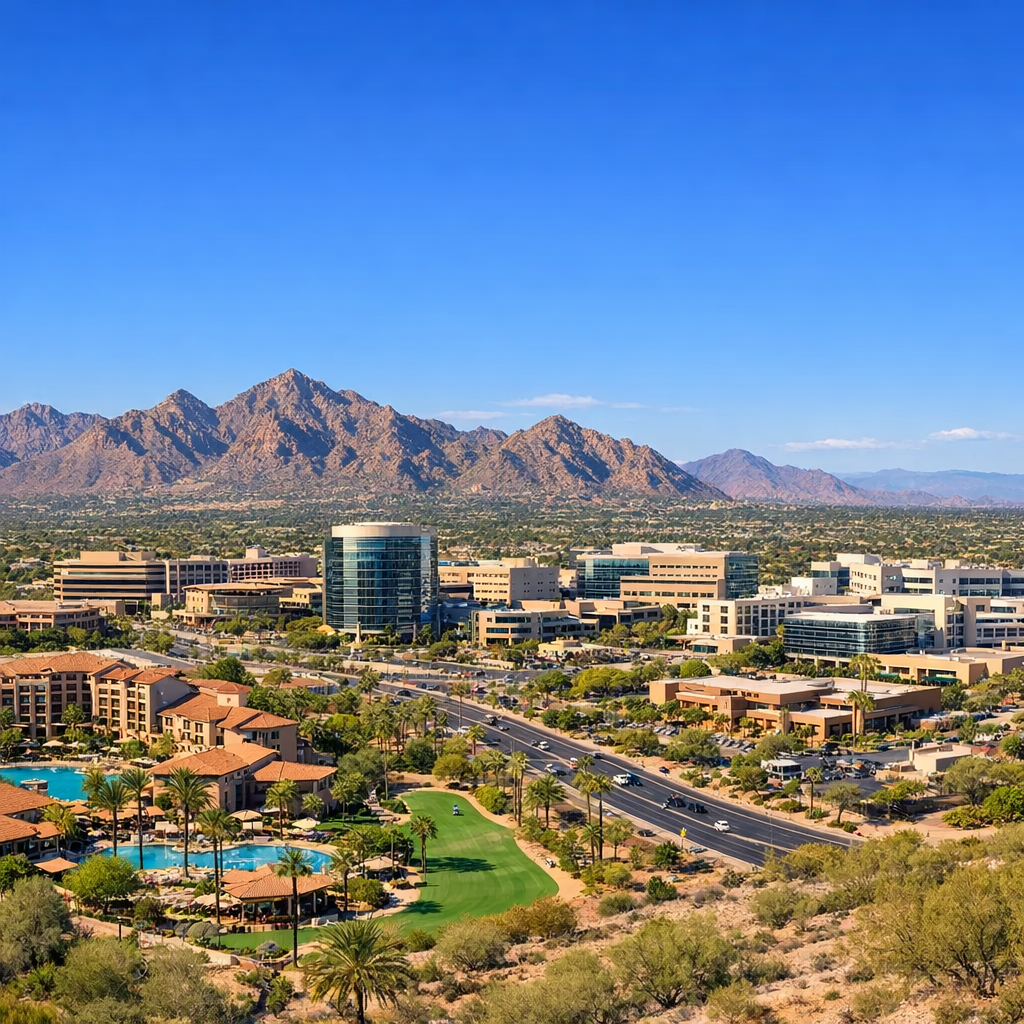
Scottsdale, Arizona, has evolved from its agricultural roots into a dynamic economic hub, characterized by a diverse range of industries and a resilient business environment. This article provides an overview of the city’s key economic sectors and recent developments contributing to its growth.
Tourism: The Cornerstone of Scottsdale’s Economy
Tourism remains a vital component of Scottsdale’s economy, attracting over 9 million visitors annually and generating approximately $2 billion in economic impact. The city boasts numerous luxury resorts, including The Phoenician, the Fairmont Princess, and Sanctuary Camelback Mountain, which collectively employ over 15,000 individuals. These establishments not only provide employment opportunities but also enhance Scottsdale’s reputation as a premier travel destination.
Healthcare: A Growing Economic Pillar
The healthcare sector has emerged as a significant contributor to Scottsdale’s economy. Renowned institutions such as the Mayo Clinic and HonorHealth, along with specialized medical facilities, have established a strong presence in the city. This growth has spurred advancements in bioscience research and medical device manufacturing, creating high-wage jobs and attracting medical tourism to the area.
Financial and Business Services: Expanding Horizons
Scottsdale has witnessed substantial growth in the financial and business services sector. Major companies, including Nationwide Insurance, Vanguard, and Axway, have established regional headquarters in the city, drawn by its high quality of life and educated workforce. This influx has diversified the local economy and provided a stable foundation for continued growth.
Real Estate: A Dynamic Market
The real estate market in Scottsdale reflects the city’s economic vitality. Over the three months ending May 2026, the median sale price of homes reached $954,000, marking a 9.1% increase compared to the same period the previous year. Homes typically sell after 63 days on the market, indicating a healthy demand for residential properties.
Commercial Real Estate: Trends and Developments
Scottsdale’s commercial real estate sector has experienced notable trends. As of the first quarter of 2026, the city reported a 9.7% vacancy rate for industrial spaces, with an average lease rate of $21.40 per square foot. Office spaces had a 14.3% vacancy rate at $32.59 per square foot, while retail spaces showed a 3.8% vacancy rate at $35.69 per square foot. These figures highlight the city’s robust commercial real estate market and its appeal to businesses.
Infrastructure and Development: Enhancing Economic Growth
Ongoing infrastructure projects are set to further bolster Scottsdale’s economy. The redevelopment of a waterfront property into The Lakefront at Scottsdale is a prime example. This mixed-use project aims to transform the area into a destination featuring restaurants, retail, office space, and public gathering areas, all centered around the waterfront setting. Such developments are expected to attract new businesses and visitors, contributing to the city’s economic vibrancy.
Community Satisfaction: A Testament to Economic Health
Scottsdale residents express high satisfaction with the city’s economic environment. A recent community survey revealed that over nine in ten participants feel safe in their neighborhoods and downtown areas during the day. Additionally, residents rated the city’s economy positively, noting Scottsdale as an excellent place to work and visit, with a diverse array of businesses and services.
In conclusion, Scottsdale’s economic landscape is marked by a diverse mix of industries, a thriving real estate market, and ongoing development projects. These factors, combined with high community satisfaction, position the city for sustained economic growth and prosperity.